CHANCE® Helical Piers
Helical Piers in Oklahoma City
Steel helix plates screwed down past the moving clay into stable bearing soil — with the capacity of every pier verified as it goes in.
How a helical pier works
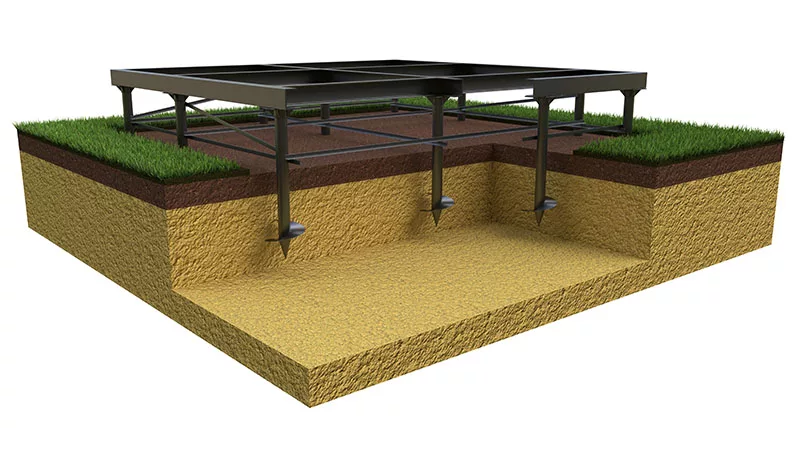
Think of a helical pier as a giant steel screw. Round helix plates welded to a galvanized steel shaft are torqued into the ground with hydraulic equipment. As the pier advances, it passes through Oklahoma's active clay — the layer that swells and shrinks with the weather — and keeps going until it reaches stable, load-bearing soil.
Here's the part we like most: the amount of torque it takes to turn the pier relates directly to how much load it can carry. We watch that number on every pier we install. When we tell you a pier is good for a certain load, it's because we measured it — not because we hoped.
Once the piers are set, brackets connect them to your foundation, and the weight of your home is transferred off the shifting clay and onto steel anchored below it.
Why we use CHANCE® helical piers
- Installation torque is monitored, so load capacity is verified on every single pier
- Practically vibration-free — gentle on your home and your neighbors
- No soil spoils to haul away and minimal disruption to landscaping
- Immediate load capacity — no waiting for concrete to cure
- Compact equipment works in tight, limited-access spots
- Galvanized, high-strength steel built for the long haul
A long track record
Screw piles aren't new. Engineers were using them to support lighthouses as far back as 1833. In the 1950s, A.B. Chance pioneered power-installed screw anchors, and that work led to the modern CHANCE® helical pier. Today the system is approved by national building code agencies and trusted by engineers across the country.
Not sure whether helical or resistance piers fit your home? Read our foundation repair FAQ or see why Oklahoma foundations move.
Find out if helical piers are right for your home.
Free inspection and a straight answer — even if the answer is that you don't need us.